Kingsley Wu
Raw Material
Math is a very important subject that accompanies us in primary school, high school and university.It is a subject that many countries think must be learned.
There are many types of math,such as equations,conversions and graph.Of course, these types are also have simple,diiffcult and very difficult.
For equation, students will learn how to find the unknown of a problem.WE usually call the unknown of a equation X,and solve this X to complete the equation.Sometime equation also have many X ,and students need calculations steps one by one .
Interview Teacher
1. How often will there be test or quizs?
- Varies between units.
2. How much homework is give each week?
- Homework will be given out daily.
3. Which textbooks do we use?
- We currently utilized Michaelson text books.
4. How should students prepare for tests or exams?
- Students should revise important material and avoid cramming last seconds.
5. What common mistakes do students make in this course?
- Student often make mistakes while solving foundation computation problems.
6. How often are new concepts introduced?
- New concepts will be introduced daily.
7. Do assignments include group work?
- Depend on units
8. Are calculators required for this course?
- Not necessary, but will be useful
9. Are online tools required for this course?
- Yes, Microsoft Teams
10. What major unit does this course include?
- Major units include polynomials, linear equations, rational numbers, exponent laws, linear equations, similarity of shapes, intro to statistics, incomes, budgets and interests.
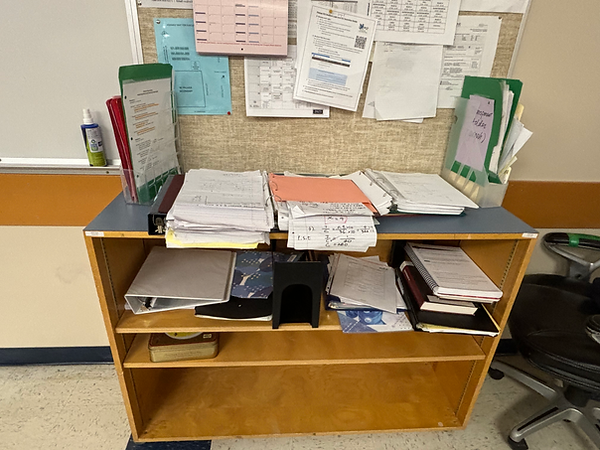


Grade 9 students are expected to know the following:
-
operations with rational numbers (addition, subtraction, multiplication, division, and order of operations)
-
exponents and exponent laws with whole-number exponents
-
operations with polynomials, of degree less than or equal to 2
-
two-variable linear relations, using graphing, interpolation, and extrapolation
-
multi-step one-variable linear equations
-
spatial proportional reasoning
-
statistics in society
-
financial literacy — simple budgets and transactions
For conversions, we will convert two different units into the same, and each related unit will have advance rate.For example,1L equals 1000ml,and 1m equals 100cm.

Interview Students
1. How difficult are the test in math class?
- Most test regarding math class would lean towards higher difficulty.
2. What do you like about that subject?
- I am mostly intrigued by the various topics that my teacher has taught.
3. What are your thought on the subject?
- Math is not a favorite for most students due to the challenging questions.


Grade 8 students are expected to know the following:
-
perfect squares and cubes
-
square and cube roots
-
percents less than 1 and greater than 100 (decimal and fractional percents)
-
numerical proportional reasoning (rates, ratio, proportions, and percent)
-
operations with fractions (addition, subtraction, multiplication, division, and order of operations)
-
discrete linear relations (extended to larger numbers, limited to integers)
-
expressions- writing and evaluating using substitution
-
two-step equations with integer coefficients, constants, and solutions
-
surface area and volume of regular solids, including triangular and other right prisms and cylinders
-
Pythagorean theorem
-
construction, views, and nets of 3D objects
-
central tendency
-
theoretical probability with two independent events
-
financial literacy — best buys
Grade 11 Pre-calculus students are expected to know the following:
-
operations on powers with integral exponents
-
prime factorization
-
functions and relations: connecting data, graphs, and situations
-
linear functions: slope and equations of lines
-
arithmetic sequences
-
systems of linear equations
-
multiplication of polynomial expressions
-
polynomial factoring
-
primary trigonometric ratios
-
financial literacy: gross and net pay
There are many different graphics.Such as rectangle,triangle,and square.In class, we will find a way to find the area, surface area and volume.Some figures can also be combined graph, such as square and triangle.So we need to fpcus more one calculation.
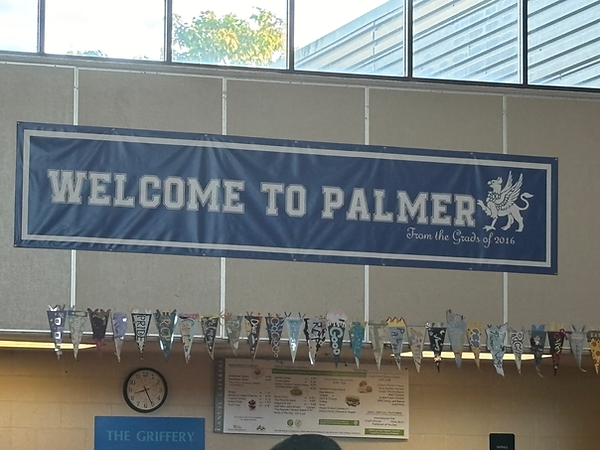


Grade 10 Foundation of Mathematics Pre-calculus students are expected to know the following:
-
operations on powers with integral exponents
-
functions and relations: connecting data, graphs, and situations
-
linear functions: slope and equations of lines
-
systems of linear equations
-
multiplication of polynomial expressions
-
polynomial factoring
-
primary trigonometric ratios
-
financial literacy: gross and net pay
Grade 12 Pre-calculus students are expected to know the following:
-
transformations of functions and relations
-
exponential functions and equations
-
geometric sequences and series
-
logarithms: operations, functions, and equations
-
polynomial functions and equations
-
rational functions
-
trigonometry: functions, equations, and identities


